Little Deer, Christmas: Festive Illustrations Review
As a designer who spends most of my week juggling brand identities for boutique clients and prepping seasonal campaigns for handmade businesses, I am always on the hunt for assets that strike the right balance between whimsy and professionalism. When I first opened the files for Little Deer, Christmas, my immediate impression was one of gentle nostalgia. This isn't the loud, neon-bright holiday clipart you see everywhere in big-box store flyers. Instead, it offers a softer, more organic aesthetic that feels perfectly suited for modern design trends leaning into warmth and authenticity.
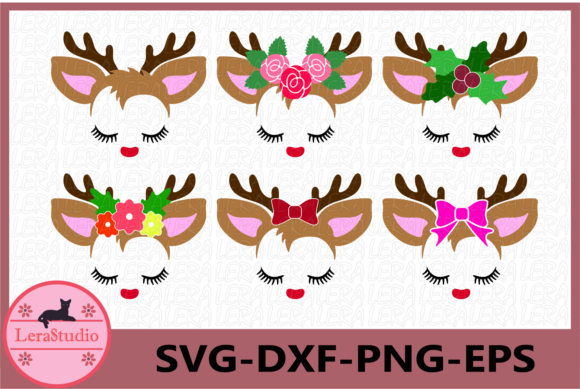
The visual mood created by these Illustrations is undeniably cozy. The lines feel hand-drawn yet refined, suggesting a style that bridges the gap between traditional storybook art and contemporary flat design. For a client project, say, a local artisanal candle shop launching a winter collection or a boutique bakery promoting their holiday cookie boxes, this asset immediately sets a tone of approachability and charm. It tells the audience that the brand values craftsmanship and heart, which is crucial for small business branding in today's saturated market.
Integrating the Asset into Real-World Client Projects
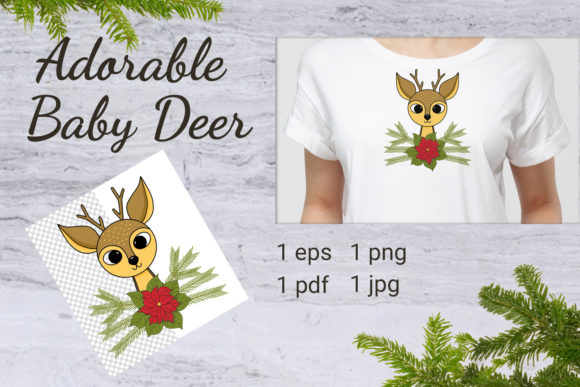
In a practical design scenario, versatility is king. I recently conceptualized a rebrand for an Etsy seller specializing in knitted baby goods, and Little Deer, Christmas became the anchor for their seasonal packaging design. The deer motif works exceptionally well as a hero graphic on product labels, where it draws the eye without overwhelming the product name. Because the illustration carries such strong emotional appeal, it instantly boosts audience engagement on social media graphics. When used in Instagram posts or Pinterest pins, the imagery stops the scroll by offering a moment of visual calm amidst the holiday chaos.
Beyond packaging, this graphic design asset shines in merchandise creation. For print-on-demand sellers, the clarity of the design translates beautifully onto t-shirt designs and tote bags. Whether you are creating a sublimation design for a mug or a sticker design for a planner, the elements hold up well. I also tested it within a Canva template for a client's email newsletter, and it integrated seamlessly with both serif font and sans serif font pairings. It complements script font headers beautifully, adding a handwritten feel to editorial design pieces, while also standing strong next to bold display font styles for marketing visuals.
Strategic Placement and Visual Hierarchy
Understanding where to place Little Deer, Christmas is key to maintaining a professional look. These illustrations work best in large layout areas where they can breathe, such as the center of a poster, the front of a greeting card, or as a focal point on a website banner. They serve as excellent decorative accents in themed collections, helping to tie together a cohesive campaign visual strategy. In packaging details, using the deer as a repeating pattern or a singular seal adds a touch of luxury and thoughtfulness to the unboxing experience.
However, caution is required when deploying these assets in crowded layouts. Because the style relies on delicate lines and specific textures, using them at very small sizes can cause the details to muddy, especially in low-contrast designs. If you are working on minimalist branding or professional corporate materials that require a very clean visual hierarchy, this asset might be too ornate. It should be used carefully on complex backgrounds; always ensure there is enough negative space around the deer to let the illustration pop. For projects requiring strict readability, keep the deer as a supporting brand element rather than competing with critical text.
Technical Performance and Designer Notes
Before committing to any creative design asset for a paying client, I run a rigorous technical checklist. With Little Deer, Christmas, here is what you need to verify to ensure commercial design success:
- Contrast Testing: Always test the asset in black and white first. This reveals if the tonal values are distinct enough to survive single-color printing, which is common for stickers and budget-friendly packaging.
- Background Versatility: Check contrast on both light and dark backgrounds. While many files come with PNG transparency, you must ensure the edges are clean and free of halos, especially if you plan to use them on colored product mockups.
- Scalability: Preview the design at tiny sizes (like a favicon or social profile pic) and massive scales (like a trade show banner). A good SVG design or high-resolution PNG should remain crisp without pixelation.
- File Format Inspection: If you are a Cricut user or working with vinyl cutters, confirm the availability of vector formats like SVG or EPS. This allows you to edit paths and separate colors for layered sublimation design projects.
- Typography Pairing: Experiment with different typefaces. I found that pairing this illustration with a rounded sans serif creates a friendly vibe, while a classic serif adds elegance. Avoid overly busy handwritten fonts that might clash with the detailed linework of the deer.
- Licensing Verification: Perhaps most importantly, review the commercial license terms. Ensure the digital product allows for use in items for sale, such as printable wall art or physical goods, to avoid legal issues with your client or on platforms like Etsy.
Final Verdict for Professional Use
Ultimately, Little Deer, Christmas is a robust addition to any designer's library of design assets. It excels in scenarios where the goal is to evoke warmth, tradition, and a handmade feel. For brand owners and marketers looking to humanize their visual identity during the holiday season, this illustration provides a strong foundation. It enhances visual trust by signaling quality and attention to detail.
While it may not suit every corporate environment, its strength lies in the creative marketplace where personality drives sales. Whether you are building a brand identity from scratch, sprucing up web design elements, or crafting a one-off Cricut project for a local event, this asset delivers. By respecting its limitations regarding size and background complexity, you can leverage its charm to create polished, memorable work that resonates with audiences. It is a testament to how the right illustration can transform a standard layout into a storytelling experience.